Framework
Shape your ideas
Sustainabiliy in business
Entrepreneurship today is not just about profit—it’s about purpose. As climate change accelerates, social inequalities deepen, and resources dwindle, businesses must innovate responsibly. Sustainable entrepreneurship is the answer: creating ventures that generate economic value while protecting the planet and uplifting communities. Below, we explore its key pillars with inspiring real-world examples.
What is Sustainable Entrepreneurship?
Let’s start with a simple question: What does it mean to build a business that lasts?
Sustainable entrepreneurship is about more than making money—it’s about creating value for people and the planet while ensuring your business thrives in the long run. Instead of chasing quick wins, sustainable entrepreneurs focus on resilience and responsibility.
These businesses align with the UN Sustainable Development Goals (SDGs), which means they contribute to solving global challenges like poverty, climate change, and inequality. Imagine running a business that not only earns profits but also makes the world better—that’s the power of sustainable entrepreneurship.
Principles of Circular Economy
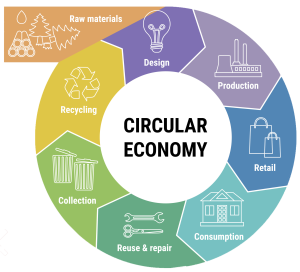
Think of the circular economy as a “no waste” system. Instead of the traditional “take, make, dispose” model, it’s about keeping resources in use for as long as possible. Here are the three key principles:
- Design Out Waste
Products should be built to last, repair, and recycle. For example, a shoe brand that lets customers return worn-out shoes for refurbishment instead of throwing them away. - Keep Resources in Use
Materials should circulate within the economy. Think of companies that turn old plastic bottles into new clothing. - Regenerate Natural Systems
Businesses should give back to nature—like planting trees to offset carbon emissions or using farming methods that restore soil health.
This approach isn’t just good for the planet—it’s good for business. Customers love brands that care about sustainability.
Global Challenges = Business Opportunities
Big problems often lead to big ideas. Climate change, social inequality, and resource depletion might sound overwhelming, but they’re also opportunities for innovation.
- Climate Change: Entrepreneurs are creating renewable energy solutions, carbon-neutral packaging, and green logistics systems.
- Social Inequality: Businesses are embracing fair trade, inclusive hiring, and community-based enterprises.
- Resource Depletion: Zero-waste production and sustainable sourcing are becoming the norm for forward-thinking companies.
Ask yourself: Which global challenge inspires me the most? How can I turn it into a business idea?
The Triple Bottom Line (TBL)
Traditional businesses measure success by profit alone. Sustainable businesses use the Triple Bottom Line:
- People: Are we treating employees fairly? Are we helping communities thrive?
- Planet: Are we reducing carbon emissions and conserving resources?
- Profit: Are we financially sustainable so we can keep making an impact?
This framework ensures your business grows without harming society or the environment.
ESG Metrics & Tools
How do you know if your business is truly sustainable? That’s where ESG (Environmental, Social, Governance) metrics come in. They measure performance in three areas:
- Environmental: Carbon footprint, energy efficiency, waste reduction.
- Social: Employee well-being, diversity, fair labor practices.
- Governance: Transparency, ethics, and accountability in decision-making.
Investors and customers increasingly look at ESG scores before supporting a business. So, understanding these metrics gives you a competitive edge.
Key Roles of the CE Framework in Sustainable Businesses
The circular economy (CE) framework plays a crucial role in sustainable businesses by providing a systemic model that decouples economic growth from finite resource consumption and environmental degradation. It transforms the traditional linear “take-make-dispose” model into a regenerative system, driving value across environmental, economic, and social dimensions (the triple bottom line).
- Resource Efficiency and Conservation: The primary role is to optimize the use of materials and resources. By prioritizing reuse, repair, refurbish, remanufacture, and recycle, businesses drastically reduce the need for virgin raw material extraction, which conserves natural resources and protects ecosystems.
- Waste and Pollution Elimination: The CE is fundamentally designed to eliminate waste and pollution from the system by treating byproducts as valuable resources that can be reintegrated into production cycles. This prevents environmental contamination and reduces the burden on landfills.
- Supply Chain Resilience: By reducing dependence on new raw materials, businesses can mitigate risks associated with volatile commodity prices and supply chain disruptions caused by geopolitical issues or climate events.
- Economic Opportunity and Innovation: The framework encourages innovation in product design, material use, and business models. It opens up new revenue streams, such as “product-as-a-service” (leasing instead of selling), repair services, and second-hand markets. This focus on efficiency often leads to significant cost savings in materials and waste management.
- Enhanced Brand Reputation and Customer Loyalty: Businesses that adopt circular practices improve their brand image and attract a growing number of environmentally conscious consumers who demand transparency and responsibility from companies.
- Regulatory Compliance and Future-Proofing: With governments increasingly introducing regulations and incentives to foster a circular economy, businesses that proactively integrate these principles can ensure compliance and gain a competitive advantage in evolving markets.
- Social Benefits and Job Creation: The shift to a circular economy is projected to create new, non-relocatable jobs in sectors like recycling, maintenance, and remanufacturing. It also promotes social equity by supporting fair labor practices and inclusive governance.