
Framework
Shape your ideas
Planning
Planning, monitoring and evaluation are one of the best approaches to ensure that a project is executed within the plan and leads to the expected outcomes and impacts
- They ensure better transparency and accountability
- They help organizations catch problems early
- They helps ensure resources are used efficiently
- Organizations learn from their mistakes and improve decision-making
The coordinator produces a detailed project execution plan and organises all participants. While project initiation focuses on finding the product that will bring the greatest benefit, project planning is aimed at finding the approach that will ensure obtaining the desired product as quickly and cheaply as possible.
Work breakdown structure (WBS)
Project structuring and the defining of the task list are the first steps in the detailed project planning, although a rough plan with milestones can be defined during the initiation phase. Some authors also suggest that the team should first discuss the tactics of execution. Common tactical decisions are:
main execution phases regard to the client’s requirements and the way or/and the technology of the execution
distribution of work between the team and the client
whether (and where) hiring contractors would be beneficial
what solutions or semi-products can (and should) be bought
the use of specific solutions or components developed in previous projects
Although tactics are not specifically defined or documented, the team should discuss tactical ideas in defining the WBS. Inputs for the WBS preparation include the scope, product(s) breakdown structure (PBS), product(s) specifications, and the potential client’s requirements regarding the project milestones.
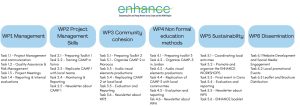
The typical graphic format of a WBS is similar to that of an organisational chart, however the work can also be structured (and tasks listed) only textual, in one column or with indents (as shown in the project scheduling tools).
In defining the tasks, tactical decisions should also be considered. If we choose to entrust a service (a set of tasks) to a contractor, then we do not plan its tasks, but only the solicitation tasks (preparation of demand, tender or direct communication, negotiation, signing a contract); then we add only one task — execution of the service by contractor.
The starting point for the second breakdown technique is the typical successive phases of the project related to project milestones, such as product design, prototype development, product verification, validation of production. The difference lies in the fact that PBS is taken into account, but only as a basis for discussion during the planning of tasks.
GANTT
One of the most important tools, so to say a basic project manager tool for time planning and controlling, is the Gantt chart. It displays graphically the duration of tasks, while tasks are listed down, one below the other. It clearly displays the starting date and the deadline of each task, and also defines when the tasks’ performers need to reserve their time for work on the project. The Gantt chart also shows project phases with milestones, and time reserves of non-critical tasks that can be used for levelling the workload of project’s staff.
It enables quick and easy calculation and verification of several possible scenarios of the execution, and simulation of measures and consequences in the risk management process. With Gantt chart manager coordinates tasks of team members and tasks to be executed. Participants in the project planning process (project manager, core team, sometimes also contractors) usually estimate the duration of tasks based on their experience.
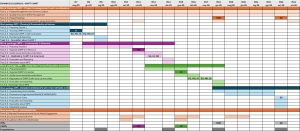
Task dependencies can be presented to avoid bottlenecks or downtime. Project managers can used dedicated project management software or simply a digital calendar to automate notifications on upcoming deadlines to keep the project on track. When the team updates their status, task management and resource management information are updated on the GANTT to keep partners updated.
On a GANTT, and in general in project management, milestones are markers of the end of a work package or phase. They mark significant points of time in the project, usually the completion of interim project products (e.g. a draft of a publication), the submission of an official report, or an important event (e.g. a review meeting). When included in the time planning of a project such milestones can serve as an important tool to assess whether the project is on track. They can also indicate the need to make stop, go, or return decisions. Moreover, milestones can also enhance the motivation of the team in that when crucial progress has been achieved, this joint success should be celebrated together.
Critical Path Method (CPM)
Critical Path Method (CPM) is a cornerstone of project management techniques. CPM involves the use of network diagrams, WBS and Gantt charts. CPM consists in using these tools to create a project timeline and identify the critical path, which is the longest sequence of activities in the project. The activities in the critical path are known as critical tasks and have the highest priority in terms of project schedules. Now you know what tasks are critical to the project and which have float or can be delayed without lengthening the project timeline. With this information, you can determine the shortest time needed to complete the project.
PERT
PERT is an acronym that stands for Program Evaluation and Review Technique. It’s a project management technique to help with time estimates. Scheduling is critical to getting a project completed on time but also within the set budget.
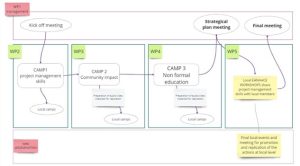
PERT manages probabilities by using network diagrams and simple statistical methods. PERT breaks down tasks into detailed activities, by using the WBS discussed above, then adds these to a PERT diagram to identify those activities that are interdependent. From that data, you create an illustrative map of the network of activities and their interdependencies.