
Framework
Shape your ideas
Managing risks
 Risks are internal or external events that may occur during project implementation and could threaten the achievement of project objectives and the project as a whole. A risk could be, for example, a partner dropping out or a key change in policy that goes against what the project is trying to achieve.
Basic risk Management is important for every project, but the level of detail needed varies depending on the size of the project and the number of risks and possible impacts on the achievement of the objectives. Identifying risks and outlining contingency measures for when they happen should be a task for every partnership, regardless of whether this is required by the programme or not.
This process involves three steps:
- Identifying risks
To identify risks you can look at possible sources of risk or at the threats / problems that can become risks. Sources include the team members, stakeholders, sub-contractors, target groups, etc. Problems could be, for example, a change in the political environment or the loss of money through decommitment.
A good way to identify relevant risks can be an open brain-storming session at one of the partner meetings either during the project development stage or very early on in the start-up phase on ‘What can go wrong?’’ All partners should be involved in this process to a) raise their awareness about possible risks, and b) to identify as many relevant risks as possible (especially with reference to different countries, legislations, sectors, and types of organisations involved). Do not let this exercise get out of hand: It is not about spreading gloom and panic, but rather identifying issues where a few sensible precautions can be taken.
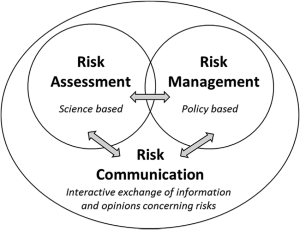
- Assessing risks
Once potential risks have been identified, they need to be qualified according to their impact on the project and their probability of occurring. As with most other aspects of planning, the assessment of probability can often only be based on assumptions and educated guesses. The impact, however, can often be estimated in relation to the budget and time lost or indicators not achieved. This assessment allows projects to prioritise risks – the ‘high risk’ decisions and actions have to be taken first.
Dealing with risks
When a problem occurs it is often too late to take any preventive or alternative actions. The project manager and partners concerned have therefore to decide in advance how to handle each risk while there is sufficient time.
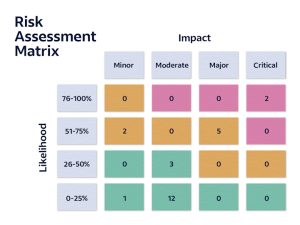
Possible approaches are:
- Ignore the risk. This is sensible for risks with a low impact, or where the resources to develop alternatives would be greater than the impact of the problem, or if the probability is low but implications would be so substantial that the project cannot compensate for them anyway. Example: Natural disasters.
- Identify alternative ways to remove the risk. This is usually the approach to take for risks with high impact and high probability. Example: The project success depends on political support in all participating regions. It is known that the regional government in one of the participating regions could lose the regional elections that will take place in the middle of the project implementation. The possible new government will have different priorities and will probably not support the project.
- Have a contingency plan to reduce the impact of problems that do happen. This does not remove the risk but is a temporary solution. Example: The project developer has been the driving force behind developing the idea and bringing the partnership together. He/she is a key asset in the project. A plan must be made for the loss of this member of staff, ensuring that their knowledge and ideas are communicated to other people in the organisation so the project can continue without them, if necessary.
It is advisable to review and monitor risks throughout the project to keep on top of them, as they might transform or new ones might come up – nothing is as constant as change.