
INTRODUZIONE
The EU has set the goal of reducing food waste by 50% by 2030 and has developed a global plan to achieve this goal. The plan includes initiatives to reduce food waste at all stages of the food system, from production to consumption. These initiatives include the development of innovative strategies to increase the shelf life of food products, providing incentives to companies to reduce food waste, and raising public awareness through campaigns and educational programs (European Commission, 2019). Additionally, the EU has implemented a series of initiatives to involve consumers in reducing food waste, such as developing campaigns that encourage consumers to buy only what they need and use leftovers. The EU also provides educational materials to help consumers understand food labels and make informed decisions about food purchases.
The report prepared during the EU FUSIONS (Food Use for Social Innovation by Optimising Waste Prevention Strategies) project finds that, in Europe, 50% of food waste comes from households.
This means that improving the current situation is within reach!
This project, on the other hand, focuses on reducing the impact of the food value chain by trying to decrease the waste generated by entities and organizations operating at the commercial level. We are talking about waste generated by farmers (who discard unattractive fruits and vegetables because they know they won’t sell), retailers (who discard unsold or imperfect fruits and vegetables), and wholesalers and transporters (who manage flows and quantities to determine the best price). At the European level, there is a strategy called the Farm to Fork strategy (https://food.ec.europa.eu/horizontal-topics/farm-fork-strategy_en) which aims to: ⦁ Accelerate the transition to a sustainable food system to have a neutral or positive environmental impact ⦁ Contribute to mitigating climate change and adapting to its impacts ⦁ Reverse biodiversity loss ⦁ Ensure food security, nutrition, and public health by making sure everyone has access to sufficient, safe, nutritious, and sustainable food ⦁ Preserve the affordability of food products while generating fairer economic returns, promoting the competitiveness of the EU supply sector, and promoting fair trade
The Farm to Fork strategy is at the heart of the European Green Deal, which aims to make food systems fair, healthy, and environmentally-friendly.
With the FOODY project, we want to contribute to this strategy by raising awareness about reducing waste, improving how people buy and use food, and most importantly, engaging young people to create ideas to USE, REUSE, and REDUCE food surpluses to minimize waste.
The benefit is not only immediate (less food waste, greater economic savings) but also long-term and shared across society.
Let’s discover together how to make it happen!
The Circular Economy
This section will help understand what a circular economy is and develop awareness about it. The goal is also to make them realize that the shift to a circular model is essential.
The circular economy is an economic system aimed at maximizing the use of products, materials, and resources by reintroducing them into the product cycle at the end of their use, minimizing waste production. Therefore, we should use resources more efficiently and effectively and ensure that we waste nothing (or as little as possible). According to the Ellen MacArthur Foundation, the circular economy is based on three key principles:
Circular economy = Reduce-Reuse-Recycle approach
It is the opposite of the linear economy, which follows the take-make-dispose approach.
In a circular economy, things are designed to be used over and over again. Instead of throwing things away when we’re done, we try to reuse, repair, or recycle them so we can use them again.The goal of a circular economy is to keep resources in use for as long as possible by promoting reuse, recycling, and regeneration. To this end, we must create a system where waste is minimized, and resources are continuously reused. This approach is more sustainable because it reduces the demand for new resources (especially raw materials), cuts waste and pollution, and promotes a regenerative economic model that benefits both the environment and society. Becoming more circular in daily life does not necessarily mean a big change. For example, when you reuse an old vegetable to make soup instead of throwing it away, that’s circular behavior.
Infographic 1: Circular Economy Infographic 2: Seasonal Vegetables Presentation: Introduction to Circular Economy Quiz 1: Daily Actions Quiz 2: Guess the Decay Time Quiz 3: Raw Material: Yes or No? Quiz 4: What Can You Put in Compost?The Food Chain and Waste
This section will help understand what a sustainable food chain is and develop awareness about it. The goal is also to make them realize that reducing food waste is essential.
There are significant benefits to applying a more circular development, such as reducing the use of fertilizers, pesticides, and water by 45-50%. It can also lower emissions and land use, and generate 10-20% of electricity. A circular economy for food is influenced by many different areas such as climate, geography, production methods, and eating habits.
The global food system is a complex and large-scale system that connects over 1 billion people every day through its many processes like growing, processing, packaging, marketing, transporting, cooking, selling, and delivering food. The food industry also requires a vast amount of the earth’s resources to sustain it. The agri-food industry uses 70% of the earth’s freshwater and 50% of habitable land. Consequently, the problems and challenges within the food industry have widespread effects and impacts.
Problems and challenges include environmental issues, climate change, food waste, and energy and water pollution. The food industry also impacts many other industries and systems vital to human life. The healthcare industry relies on the food industry and vice versa for the production of medicines, vaccines, and for mutual storage, cost, transport, and supply. Besides understanding the issues within the food system, we must also acknowledge the progress, successes, and positive impacts the industry has.
Consumers can at least have a positive impact on the last three stages of the food value chain. It’s important to show that we, as consumers, can also take action at our level. This does not necessarily mean a huge change or a bigger budget. By making informed choices about what we eat and how we consume, we can help create a more sustainable food system that supports the health and well-being of all people and the planet.
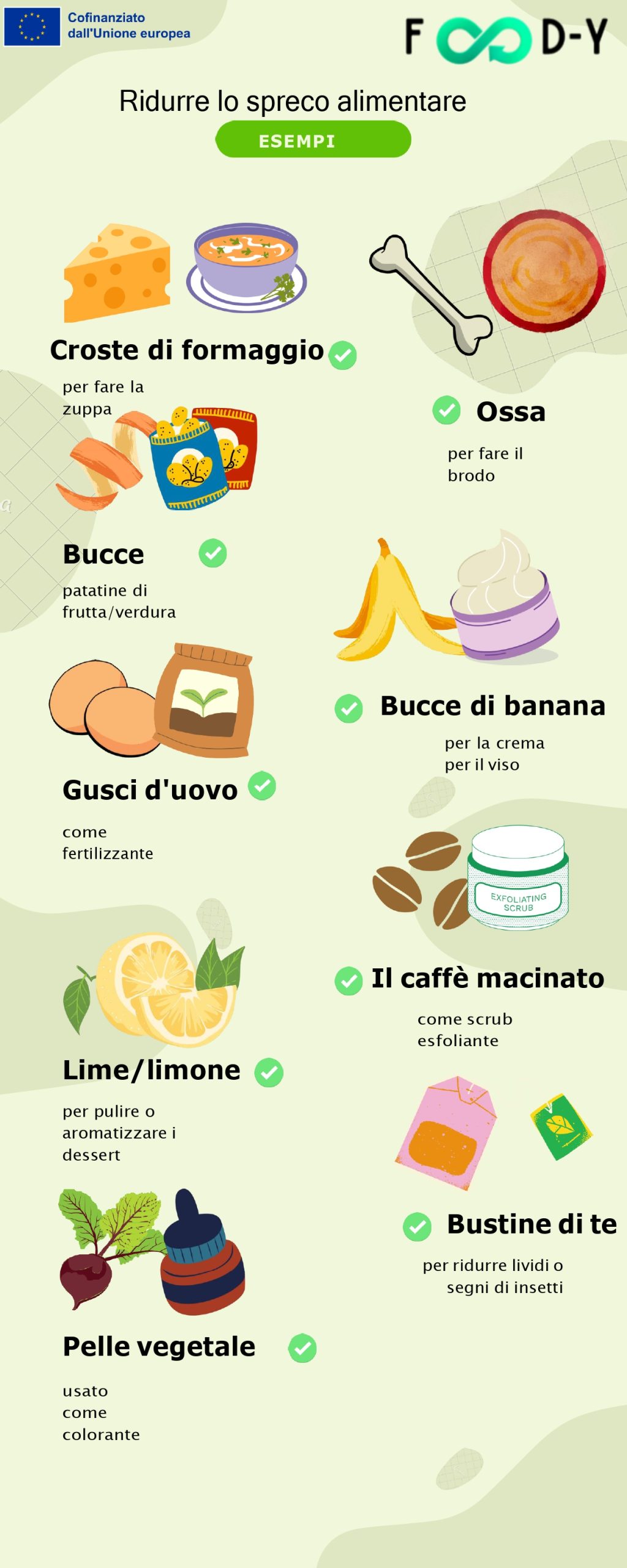
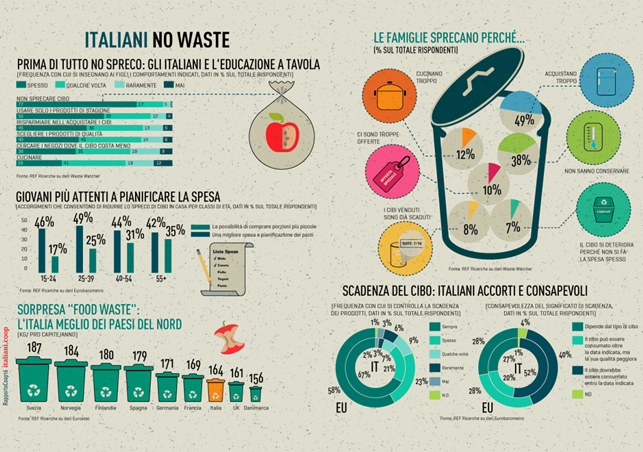
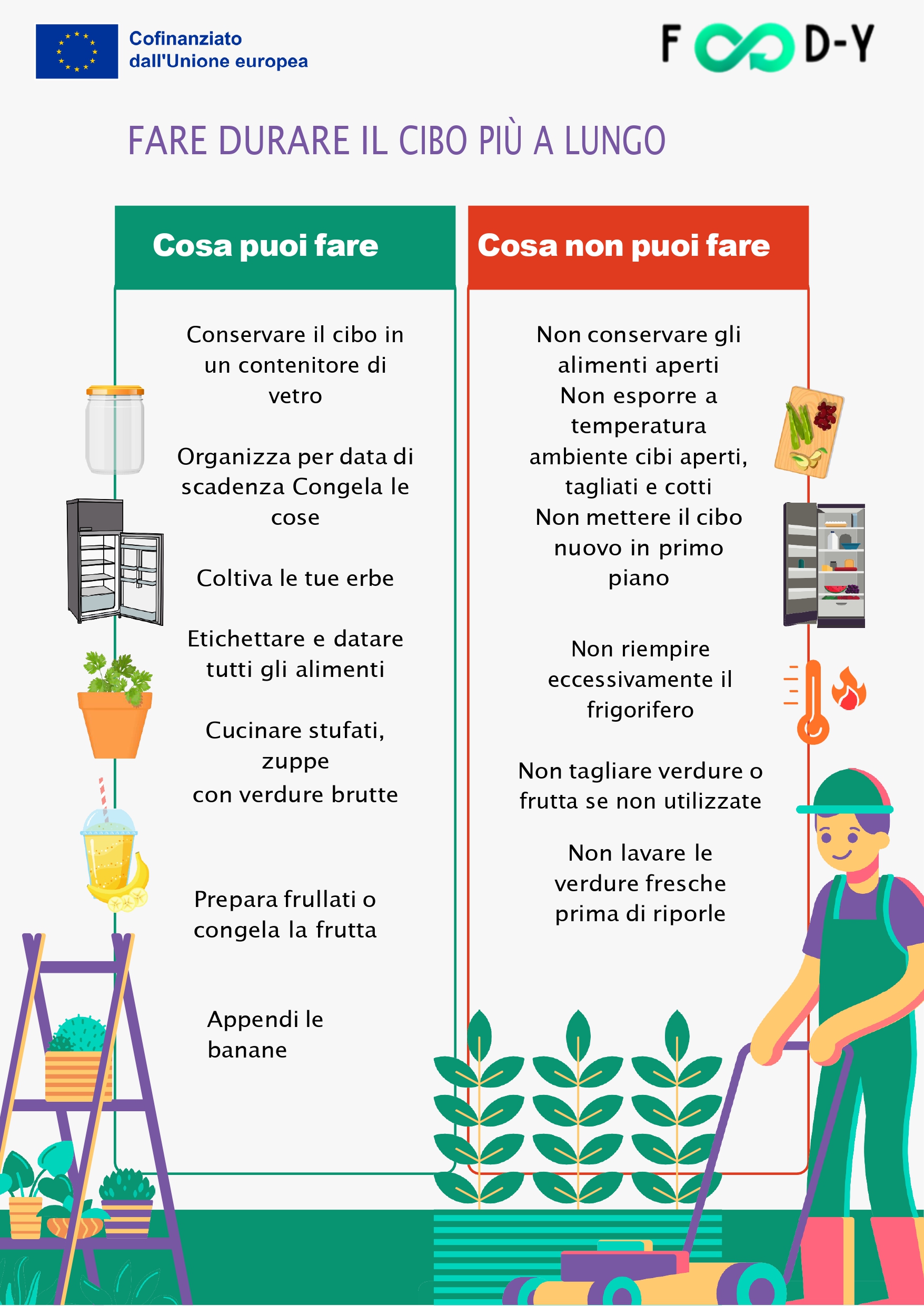
Infographic 1: Reducing Food Waste Infographic 2: Italians No Waste Infographic 3: Making Food Last Longer Presentation: Change of Mindset Quiz
Understanding Your Community
This part will help better understand one’s community and develop awareness about food waste. The goal is also to make them understand that reducing waste within the community is crucial.
As part of the FOODY project, the community mapping method will focus on helping young people understand who the local actors are, their locations, specialties, and how they can be involved in researching or implementing proposed solutions.
Community mapping can encourage people to become advocates for transforming the spaces they live in, fostering civic engagement in the process. It can also promote a sense of environmental and community responsibility among local residents.
Community mapping (sometimes called resource mapping) involves engaging residents in identifying their neighborhood’s resources, exploring opportunities, and creating a picture of what it’s like to live there.
Every community has its “players”: farmers cultivating vital vegetables and livestock, bakers, grocery stores, supermarkets, restaurants, street markets, central markets. On the other hand, there are organizations like potential beneficiaries already collecting food scraps for reuse, food banks, charities, and associations needing more resources to support those in need within the community.
These elements can be mapped to create a community portrait that showcases its capabilities and potential.
The overall goal of the mapping exercise is twofold: to foster teamwork among participants and enable them to collectively analyze the territory’s resources, understand who the players are, identify resources, and strategize interventions to improve the situation.
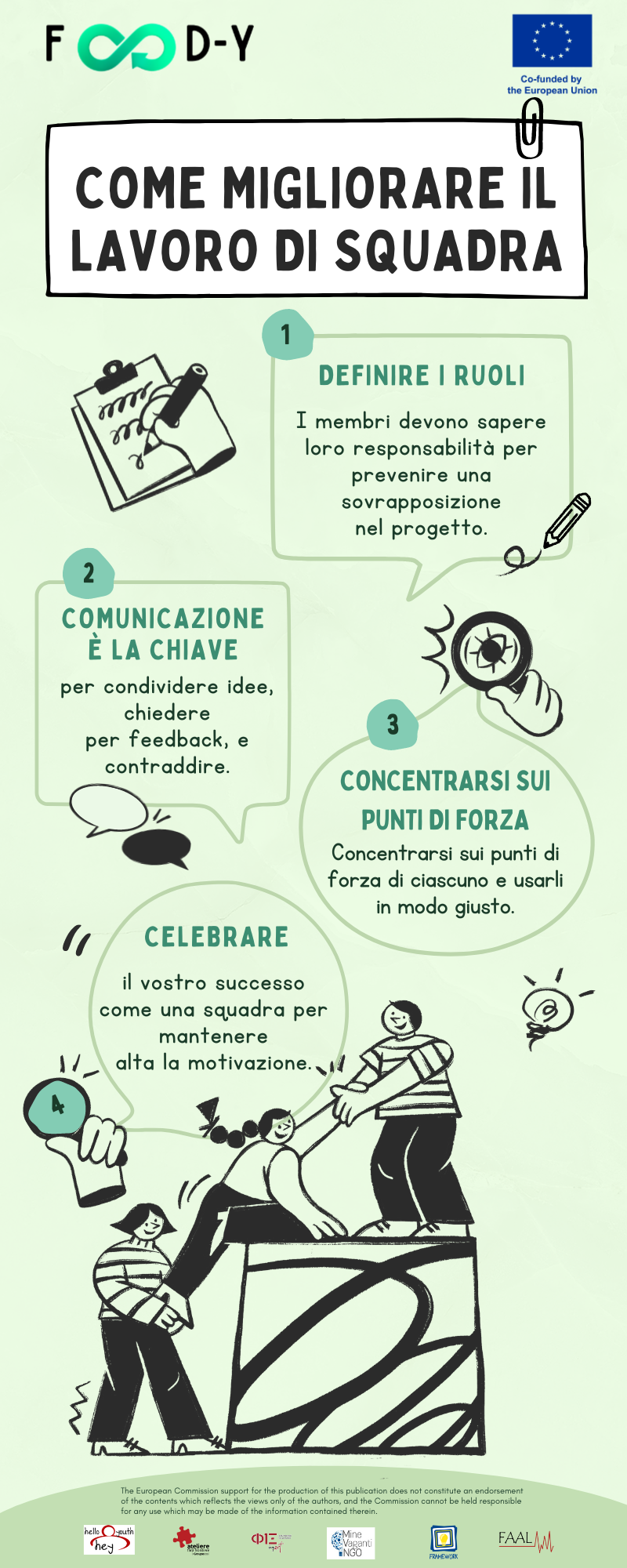
Infographic: How to Improve Teamwork Presentation 1: Introduction to Mapping Presentation 2: Working Together Quiz
Creating a Project Against Food Waste
This section will help understand how to create an effective project against food waste and develop awareness about it. The goal is also to make them understand that initiating initiatives against food waste is crucial.
Once data has been collected during the mapping phase, it’s time to structure the community improvement project, focusing on preventing food waste.
You can do this by following these steps:
– Conduct research and gather information:
Identify sources of food waste in the community through surveys, interviews, and analysis of data collected during the mapping phase. Evaluate existing food management practices in various sectors such as restaurants, supermarkets, schools, and households.
– Define SMART objectives:
Set specific, measurable, achievable, relevant, and time-bound goals to reduce food waste. For example, reduce food waste by 20% in local restaurants within 12 months, supported by awareness initiatives and food recovery programs.
– Establish the desired outcome:
Determine the desired outcome in clear and quantifiable terms, such as a 25% reduction in food waste volume in the community within two years, accompanied by a 30% increase in redistributed recovered food to charitable organizations.
– Create an action plan to achieve results:
Develop a detailed action plan that includes necessary activities, required resources, assigned responsibilities, and deadlines for each phase. For instance, implement educational programs in schools, collaborate with stores and restaurants to donate excess food, and promote public awareness campaigns on food preservation practices.
In this part of the program, we will learn how to collaborate to create a joint project.
Presentation: Design WorkshopClearly Communicating Your Project
This section will help understand how to clearly communicate your project against food waste and develop awareness about it. The goal is also to make them understand that effective communication is crucial for the project’s success.
Getting your message right is crucial for engaging your audience and delivering clear and useful information.
Once you’ve created a project (see previous unit), it’s time to present it to the community. To ensure your idea turns into concrete action, you must present it effectively.
What does this mean in practice?
– Use language appropriate to your target audience.
Always try to understand who your audience is, both in written messages and during conversations.
– Be brief and clear:
You often only get 3-5 seconds of someone’s attention.
– Use compelling facts and simple data:
Don’t hesitate to use emotions to gain engagement—appeal to both the heart and the head.
– Utilize social influence:
Let people know they are joining you and others. Help individuals feel good about their actions and even receive compliments by sharing their participation with others.
– Engage target groups as ambassadors:
They should be able to answer questions and provide encouragement.
Come presentare il progetto
Questa parte permetterà di capire come presentare efficacemente il proprio progetto contro lo spreco alimentare e di sviluppare una consapevolezza al riguardo. L’obiettivo è anche quello di far capire loro che una presentazione chiara e convincente è fondamentale per il successo del progetto.